October 9, 2026

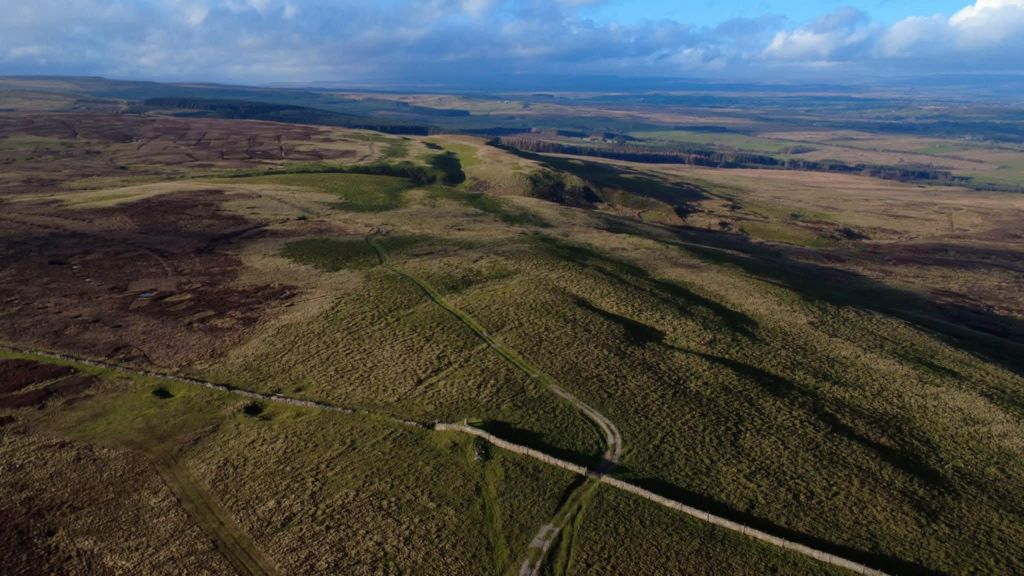
Missing link sparks Hope Moor wind farm dismay
Protestors are demanding to know why plans for a controversial wind farm doesn’t include any reference to how the electricity generated will get to the National Grid.
Fred Olsen Renewables has been accused of putting “the cart before the horse” by applying for permission to install 23, 200m-tall turbines on Hope Moor before any information on the link with the grid has been released.
The wind farm would potentially generate up to 150MW (megawatts) of electricity capable of providing power for 135,000 homes.
According to protestors, significant infrastructure would be required to take the power from Hope Moor to communities or industrial sites that would actually use it.
The likely solution would be pylons or underground cables, both of which would result in major disruption to surrounding communities during the construction process.
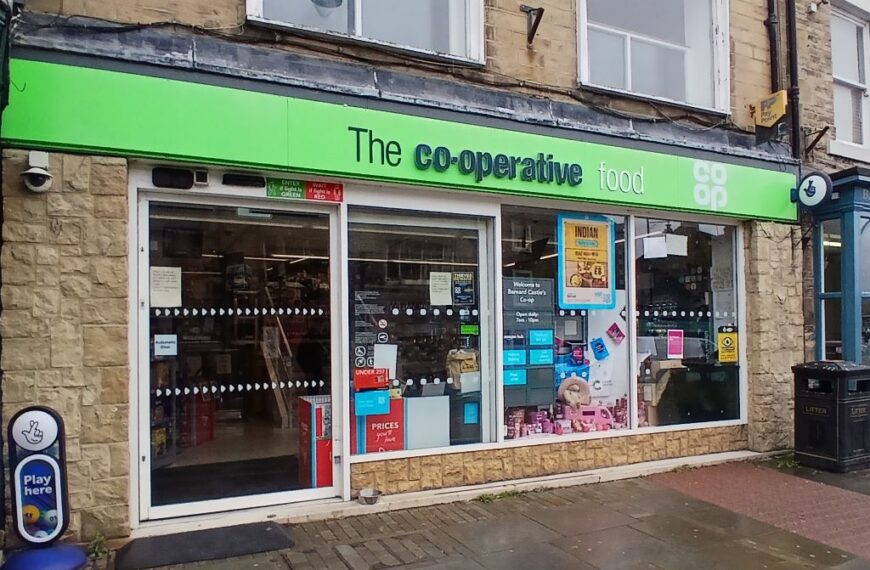
A meeting took place last week at The Witham, in Barnard Castle, aimed at informing parish councillors from communities potentially impacted by the wind farm about the planning process for the development.
Stephen Reed, planning manager for development management at Durham County Council, and his colleague Claire Teasdale, the principal planner for development management, staged a presentation highlighting the fact that Hope Moor Wind Farm is an NSIP (Nationally Significant Infrastructure Projects) application and therefore the government, not the local authority, will decide if permission should be granted.
Those attending were given the opportunity to ask questions and raise concerns and three county councillors representing wards in Teesdale, Cllr Richard Bell, Cllr Jill Campbell and Cllr Chris Foote-Wood, who are united in their opposition to the project, all addressed the audience.
Cllr Alistair Dawson, chairman of Romaldkirk Parish Council, spoke about the lack of detail on how the power was going to get to the grid.
This week, he repeated his concerns to the Mercury.
“Why is connection to the grid scoped out of the application? This is nonsense, it is putting the cart before the horse,” said Cllr Dawson.
“The site is remote, and (is) remote from a major part of the grid. If the applicant is unable to demonstrate suitable transmission to the grid, the application should not be considered.
“Any shortfall in transmission from the 100-150MW capacity will simply result in curtailment payments,” he added. “There are many examples of this. Much more wind generation is being developed than the grid can cope with. Connection to the grid must be considered as part of the application.”
Those comments were echoed by Cllr Bell, who told the Mercury: “The application is to generate 100-150MW with no information on the efficiency with which that can be transmitted to the grid.
“It’s a key deficiency in the process… but they (Fred Olsen Renewables) get paid whether it’s connected or not.
“Cynically, one would think, ‘well they aren’t putting details in the stage one consultation because they don’t want to attract a lot of opposition’.
“Just think about it, Cllr Campbell and myself have asked the question twice now of Fred Olsen, ‘How’s the power going to be transmitted away from Barningham Moor?’ Because there aren’t many people in the immediate vicinity who are going to benefit from it – 135,000-dwellings-worth of electricity, that’s, what, two or three Darlingtons?”
Following the concerns raised by Cllr Dawson and Cllr Bell, the Teesdale Mercury contacted Fred Olsen Renewables for clarification on the issue.
Euan Hutchison, the firm’s UK development director, said: “Recent changes to grid connection processes across the UK mean that the grid connection will now be progressed separately.
“Reforms to the grid connection are the responsibility of NESO (National Energy Systems Operator), and all projects are allocated a grid connection agreement at different times depending on the projects’ criteria.
“Once the grid connection details are confirmed, the connection route and method will be taken forward through a separate application.
“Any future application will follow the appropriate statutory process, including consultation where required, and further information will be shared at that stage.
“We are committed to engaging with communities and local stakeholders throughout the development of Hope Moor.”
Tags |