October 8, 2026

Hope Moor wind farm boss addresses concerns
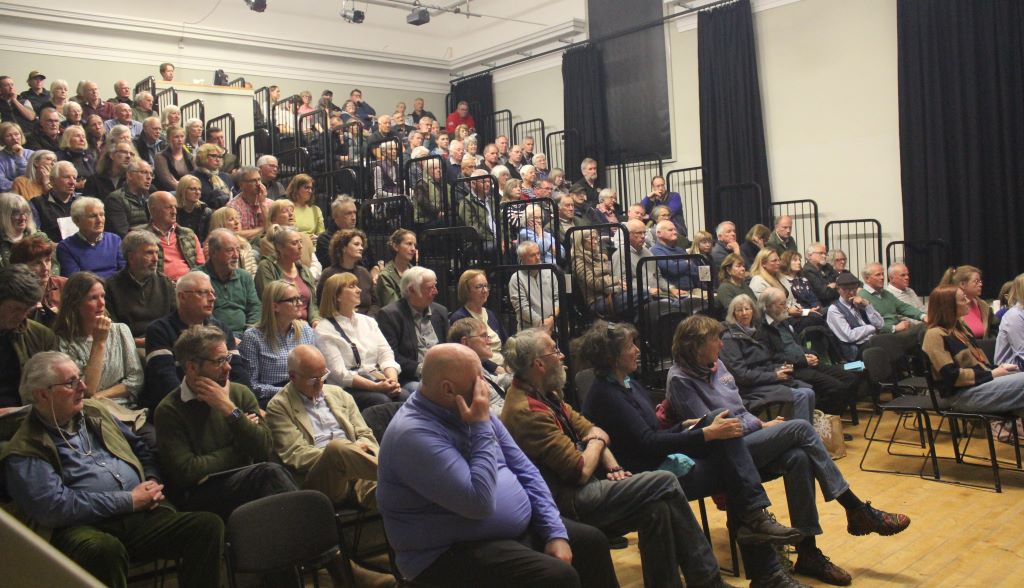
After last week’s public meeting with the Hope Farm Action Group, the Mercury sat down with Kelly Wyness, senior project manager for the proposed wind farm, to discuss some of the concerns raised locally.
One the big issues was why the farm needed to be in the moors, rather than using brownfield or offshore sites further down the Tees and into the North Sea.
Mr Wyness acknowledged that part of the siting is connected to government targets for onshore wind power.
He added: “The reality is projects located in brownfield sites or on lower lying areas have a lot of constraints, primarily residential constraints.
“Hope Moor also has its environmental challenges that we have to demonstrate we can overcome.
“But the site is incredibly windy. From that perspective it is potentially one of the most efficient wind farms in the UK.”
Legal protections
In response to concerns over damage to the wild moors and especially the valuable peat lands, Mr Wyness highlighted the developer’s four decades of experience, and the legal requirements on the company to “measurably demonstrate that you’re going to make the environment better than it would be if the project wasn’t there.”
Pressed on whether that would mean concrete improvements in Teesdale, or more abstract national net zero targets, the developers insisted there would be local benefits.
“The peat, like any other environmental constraint, has to be considered in the design,” said Mr Wyness.
“The first principles of the project are avoidance of any harm.
“We will have to propose plans to support the curlew populations, the black grouse populations.
“There are opportunities to support natural flood management on this project and peat restoration that can be done in conjunction with wider elements.”
Transport
At the action group meeting there was talk of direct action to prevent lorries and abnormal loads passing through the village on the way from the A66 to the moor, the prospect of huge vehicles grinding through country roads has upset many.
“At the minute the initial feasibility assessments have demonstrated that it’s possible to get turbine components through Newsham and along Barningham Road,” said Mr Wyness.
“We will continue to take feedback form communities on board and look at the options available.
“We will have to produce a very detailed traffic access assessment that will consider the road conditions, street furniture and any other works that need to be done to manage the process.”
Expansion
Campaigners also highlighted the expansion of other wind farms developed by Fred Olsen in Scotland and are concerned that the current proposals represent the start of a bigger development.
Representatives for the developer say that the current 23-turbine proposal is “the maximum there could be” and the plans will be revised in line with the consultation feedback.
“The Fred Olsen model in Scotland has allowed [add ons] and there has been the space to develop further phases and extensions to existing schemes,” said Mr Wyness.
“We are well aware of the constraints for Hope Moor and I’m not aware of any additional proposals at the minute.”
Community support
Critics have dismissed claims of local jobs as “fanciful”, pointing out that the work is specialised and staff are brought in for specific work.
Fred Olsen Renewables promises an estimated £750,000 a year, index linked for the project lifetime, for communities to spend on schemes of their choice.
That has been described as a “bribe” by some, but the developer insists it is about compensating communities affected by the project.
“People are entitled to their opinions on that but it’s our job to try and work with those communities to persuade them otherwise,” said Mr Wyness.
“There’s a recognition as well that communities hosting projects such as Hope Moor should benefit.”
Tags |