October 21, 2026

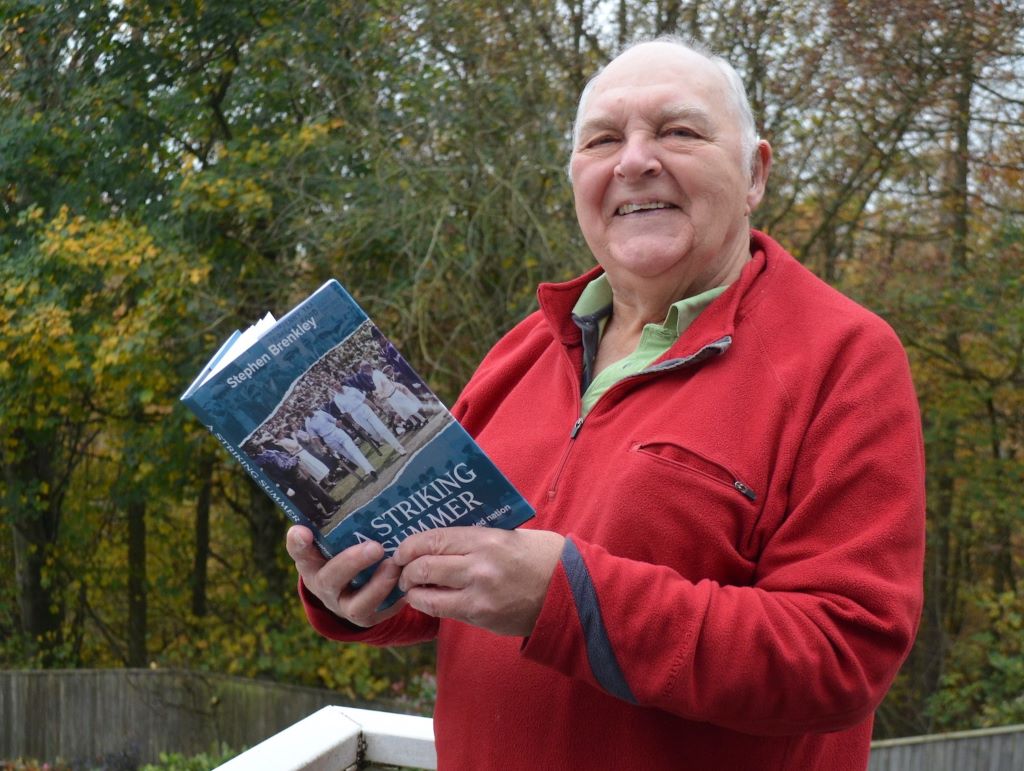
Stephen Brenkley
A Striking Summer – how cricket united a divided nation
In the seismic summer of 1926, politics and sport overlapped in a bitterly-divided nation united by cricket.
An epic series saw England attempt to regain the Ashes from a formidable Australian side.
Meanwhile, as the Tests played out in front of packed grounds, a deeply polarised Britain was reeling from the aftershocks of an historic General Strike.
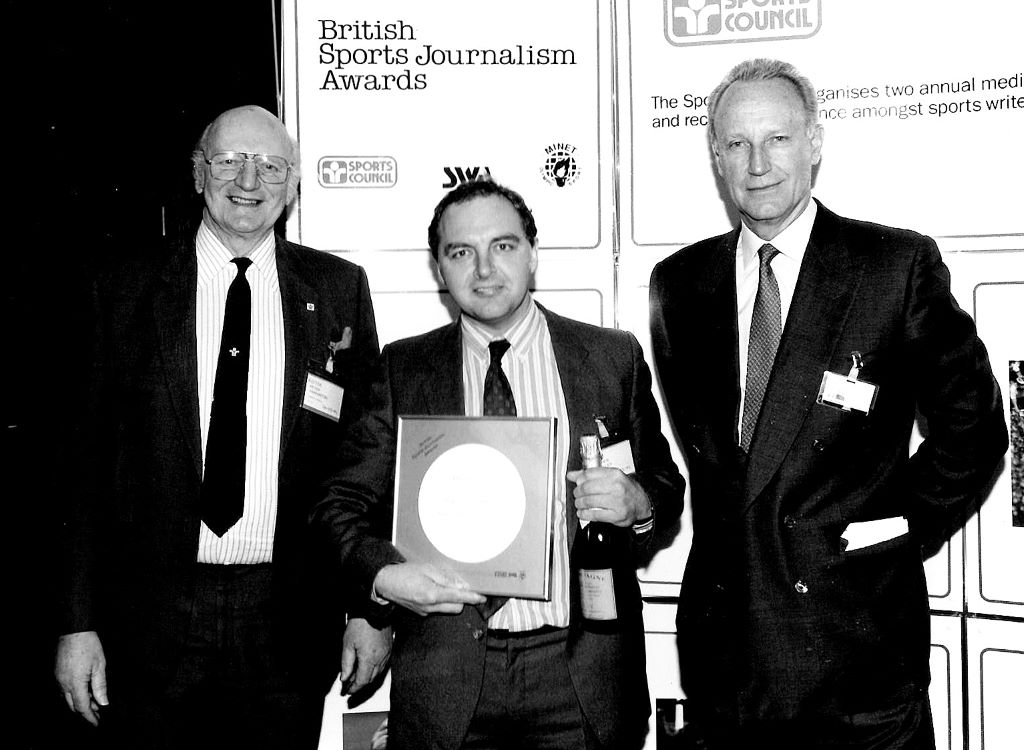
It was this turbulent backdrop that inspired Barnard Castle CC president and award-winning journalist and author Stephen Brenkley to write A Striking Summer – How Cricket United a Divided Nation.
Philip Tallentire spoke to Stephen to find out more about the events that gripped a nation on and off the cricket pitch 100 years ago…
Why did you want to write a book about 1926, the General Strike and cricket?
“After I retired I wrote the history of Barnard Castle Cricket Club and writing’s what I do.
“The 1926 series had always fascinated me because it was one of those series, like 2005 and 1953, where England had won back the Ashes after a long time.
“And, they won it in the final Test and I knew all about that.
“What I wasn’t quite aware of when I embarked on the project was the juxtaposition between the cricket and what was going on in the world.
“Social history interests me hugely and it quickly became apparent that the cricket, and the turmoil that was present in the country – still a hangover from World War One – were in many ways inextricable.
“And, pretty soon after that it became apparent that the cricket was indeed a unifying force in a country that was pretty broken in spirit and soul.
“So, I thought there was a chance to bring those two things together and from there I embarked on that process.”
Is Striking Summer a history book or a sports book?
“I would say it’s a book of social history which happens to have cricket at its forefront.
“But I wouldn’t have been interested in writing just a cricket book, and cricket is my passion, but it is important for me to embrace what was going on in the country.
“We have to remember, cricket was more of an integral part of the way England conducted itself then than it is now.
“Cricket is still important now and in a town like Barney that is particularly true, but it isn’t all embracing as it was then.
“Britain had been promised things after the war, that it would be a land fit for heroes.
“To put it bluntly, it wasn’t.
“Miners were being maltreated by private owners and their hours were being cut and their pay was being cut and that’s what led to the general strike.
“That ended after nine days but railway workers continued to be prevented from returning to work and the miners were locked out until November by owners who had no real sympathy with their plight.
“Now these were owners who had been heavily subsidised during the War when mines were taken into public ownership and the industry was suffering because of cheaper imports.
“But the owners did not treat their staff well and it affected the north – Yorkshire, Durham and Northumberland – dreadfully, because we employed more than a third of the mining workforce.
How does cricket in 1926 compare to cricket in 2026?
“There was no one-day cricket for a start.
“One-day cricket was the preserve of club cricket.
“The idea of playing limited overs cricket was an anathema.
“The County Championship was deemed to be more important than the international matches.
“All the players were expected to play county matches between the Test matches, there were by then 17 counties, Glamorgan had joined in 1921.
“Durham, of course, joined much later in 1992.
“It was more a part of England then than it is now.
“People would flock to county cricket, particularly at the weekends of course, but midweek matches did not have small crowds in those days.
“The games were played over three days, as were Test matches which is why there were so many draws.
“However, they did bowl around 23 overs per hour then whereas they are just about touching 15 now on a good day.
“And, of course, there was a division between the amateurs and the professionals.
“A lot of the amateurs during the General Strike actually helped to break the strike by working at docks and ports and so on.
“Although the government during the General Strike did put out a decree saying it did want cricket to continue because it was very important to the morale of the nation.
“And cricket did indeed continue during those nine days, there were two rounds of County Championship matches played.”
What other significant differences were there between cricket in the 1920s and the 2020s?
“The schedule was different then; there were two, three-day matches a week.
“So, matches were played on Saturday, Monday, Tuesday, and then Wednesday, Thursday, Friday.
“Train was by far the most common form of travel for cricketers.
“Before the final Test, five cricketers were playing a county game at Bournemouth.
“They had to get from there to The Oval for the final Test.
“The two amateurs would travel by first class and the three professionals would travel by third class standard!
“Things were different and there was an air of deference among cricketers.
“For that series I think Pelham Warner, the chairman of selectors, did actually say that the professionals and the amateurs could all change in the same dressing room. Incredible!
“The team had to be captained by an amateur and that amateur for the first four Tests was a chap called Arthur Carr, who was the captain of Nottinghamshire.
“He was replaced in the final Test by another gentleman cricketer called Percy Chapman who’d never captained anybody before except a school team.
“Anyway, it worked and England won.
“Percy Chapman was a genial cove who died a drunk. He’d worked during the General Strike at Folkestone Docks to try and break the strike.
“So, the captain had to be an amateur and, in the final match, there was one other amateur in the side, a young stockbroker called Greville Stevens.
“The rest of them, from memory, were all professionals and all of them left school at about 14 and became cricketers.
“If you compare that to the last home Test match that England played against India last year, when Ben Stokes was not available, ten of the players went to fee-paying schools.
“Now I’m not saying that’s wrong, and possibly Joe Root and Harry Brook went to fee-paying schools because they won scholarships – there’s a big competition among private schools to get the best sportsmen now – but they all went to independent schools.
“That was not the case in 1926 among professional cricketers.”
Top cricketers now are millionaires, what were the rewards for the best players in 1926?
“A county player would get about £300 (worth approximately £16,000 in 2026) for a summer’s employment.
“He wasn’t employed for the winter.
“Out of that money he would have to find his own travelling expenses and his own accommodation while he was at away matches.
“Someone like Jack Hobbs would get a bit more. There’d be money to be made from advertising.
“All the top players like Woolley, Hobbs, Maurice Tate, were getting paid for advertising products even in 1926, mostly cricket equipment but also chocolate, cigarettes…
“I don’t think you’d make a fortune by being a professional cricketer but you’d live a comfortable life.”
Were the top players from 1926 household names and recognisable to the public?
“All of them. Let’s go through the team for the deciding Oval Test, which England won.
“You have Hobbs opening the batting with Sutcliffe.
“Hobbs was revered in the country, it is impossible to overstate the respect in which he was held in England at that stage in his career.
“He was 41, he was a hero to the public.
“His opening partner was Sutcliffe, they’d come together a couple of years earlier and had been an instant success.
“And we talk of Hobbs and Sutcliffe now as though they were joined at the hip and that 1926 series, and particularly the fifth match, cemented their association in the public mind.
“At No3 was Frank Woolley, he was 39 then, loved by the public because of his swashbuckling attitude.
“No4: Patsy Hendren, the Middlesex player, cheeky chappy, was loved.
“Percy Chapman at five, not as well known as the others but had already built a reputation as a hard-hitting, swashbuckling batsman.
“Six: Greville Stevens, understated posh boy all-rounder.
“Seven: Wilfred Rhodes, Yorkshire spinner at the age of 48 going on 49, brought back into the Test team.
“Then Maurice Tate was batting eight and George Geary at nine, with 21-year-old Harold Larwood at ten and Herbert Strudwick, the wicketkeeper, at 11.
“They would all be recognised by the public and the grounds were packed out for the matches.
“The sequence was Trent Bridge where it rained for three days; then Lord’s, packed out; Leeds, packed out; Manchester, packed out; The Oval, absolutely packed out, though not on the first day because the papers had written so many scare stories about how packed it was going to be people didn’t go along!”
How difficult was it to research the book?
“It was difficult but enjoyable and, in fact, I could have kept on researching.
“I enjoyed the research as much as the writing because when you find a little nugget of information, you punch the air!
“What you can’t do in a book like this is just do a ball-by-ball, run-by-run, match report, you have to add lustre to that and I think there are some nice anecdotes in the book.
“I tell a story in the book about the Leeds Test, which was the third match in the series.
“It was a draw because it was rain affected.
“Four of the miners who were locked out cycled down from Newcastle to Leeds, stayed in a field overnight, then slept in a shop doorway on the second night before taking their place in the queue.
“I thought that was touching and that wouldn’t happen now.
“And that juxtaposed with the Lord’s Test where the queue went all the way up St John’s Wood Road and Wellington Road and, among the people queuing, was a young actress who was appearing in a West End play – I thought that was a nice comparison between the people who were watching the Leeds match.
“But for the striking miners to cycle down shows you how important that series was to the English public at large.”
Are there any links to Barnard Castle Cricket Club or the Teesdale in general?
“Since Barney is the city of my dreams and the cricket ground is the theatre of dreams, I was delighted to include George Macaulay in the book.
“He only played in one of the Tests but he made a vital contribution.
“Macaulay was a Yorkshire fast bowler from Thirsk who went to Barney School and was the last of its pupils to play Test cricket for England.
“I often think it’s time they had another one!”
How long did it take to research and write the book from start to finish?
“The book took two years to write because I was starting from scratch.
“The research was a huge undertaking because there is nobody alive from that period.
“The only people that I spoke to were the descendants of one of the players that took part in the series, Frank Woolley, the great Kent cricketer.
“I went down to Eastbourne to see his grandson and granddaughter and they were terrific.
“So, all my research depended on books that had been written at the time by the players that took part; by some journalists who had been around at the time; by people who had written books about the General Strike and the industrial turmoil and, most important of all, from newspapers.
“I’m now sure I couldn’t have done it without newspapers being digitised online.
“I must have looked at 1,000 copies of different newspapers to piece together what had gone on during the tour and a story eventually emerged.”
Who do you think the book will appeal to?
“The book, I hope, will appeal to people who like cricket because there’s plenty of cricket in the book.
“But I do hope it will give a flavour of what England was like 100 years ago, and how far we’ve moved on since then, because the truth is it was an unequal society and the cricket team represented that.
“It had to be led by an amateur!
“Well, that is absurd and that attitude actually didn’t disappear for a long, long time.
“Although the distinction between amateurs and professionals was abolished in 1963, for a long time afterwards there were public school amateur captains.
“The age of deference was still extremely present in 1926 and thank heavens we’ve moved on a lot.
“Society was different then and it is better now, I think.
“But it was fascinating to find out what was going on and I think cricket reflected the society in which it was being played.
“Now the best man captains the side.”
What has the reception been like for your book?
“I have to say it has been wonderfully reviewed and it was on the shortlist for the Cricket Society & MCC book of the year and the Cricket Writers’ Club book of the year.
“It didn’t win but it’s nice that it has been recognised.
Are you now working on another book?
“I’m now doing a book on the 1956 series. Again, England won the Ashes after a long time in 1953.
“Hutton’s team then won in 54/55 so in 56 they were aiming to win the Ashes for the third time in a row for the first time since the 1890s.
“Cricket was still grabbing the nation by its throat even then.
“So that book will be about England trying to win the Ashes again for the third time in a row and centrepiece of it will be the match at Old Trafford where Jim Laker took 19 wickets.
“But, it will also be about a country changing beyond recognition confronted by the Suez Crisis.
“Elvis Presley, Marilyn Monroe, commercial television, the breed of new writers known as the angry young men were all changing the nation while Laker wove his spell.”
- A Striking Summer – How Cricket United a Divided Nation, published by Fairfield Books, is available online from Amazon.co.uk
Tags |