June 3, 2026

Queen bee Pamela creates a buzz with new workshop
Bee courses and workshops were launched in the upper dale this month just in time for World Bee Day (May 20).
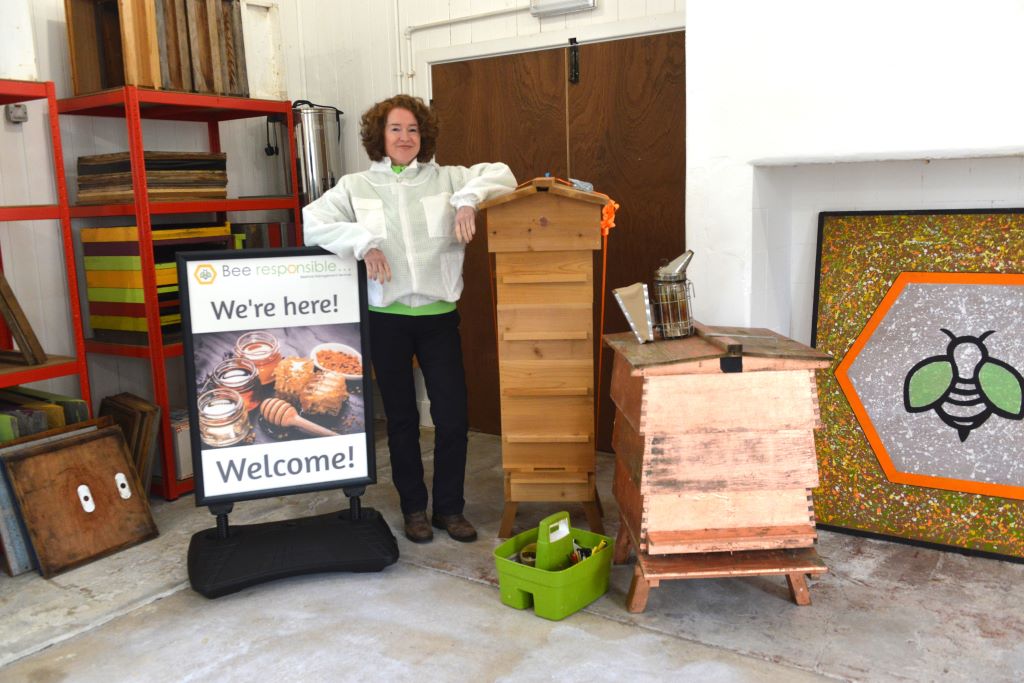
Bee expert Pamela Chambers, who runs consultancy and bee management business Bee Responsible, recently opened a workshop in Middleton-in-Teesdale after moving to the area from London.
She will be running short half-day and full-day courses, along with specialist workshops, from her new unit at the former field studies centre on Bridge Street. She also plans evening and weekend classes for beginners.
Pamela’s work in London and the Home Counties was mainly for corporates and high net-worth individuals who were looking to improve their sustainability and biodiversity and green initiatives and objectives. Included in her portfolio were the likes of Royals from the Middle East.
She said: “The corporates are looking at a green tick-box type of thing. A lot of them will rent or sponsor hives. I tell them ‘if you are looking to invest in the local environment and local biodiversity, then put your money where your mouth is’. They buy the hives, buy the bees, and then we provide professional beekeeping services.
“Then they can use the honey, they will label it with their own brand and sell it, or use it for marketing and PR.”
She sees a great opportunity in the upper dale for beekeeping because there are so few in the area, whereas London and surrounding areas have become saturated.
Pamela, who began beekeeping as a hobby in 2008 and took it up professionally in 2017, said: “London, where I was based, is absolutely saturated to the point where you have bees competing for the same food and potentially passing on diseases and pests, not only to other honey bees, but also to other insects, like wasps and even ants. I don’t approve of all of that.”
An online map by the National Bee Unit shows that in Teesdale the highest concentration of colonies per ten square kilometres is around Cockfield Fell, which has between 64 and 147. By comparison London and the Home Counties have between 270 and 668.
The next largest concentrated area in the dale is around Gainford with between 64 and 147. By contrast, the upper dale density of bee colonies is between zero and 63.
Explaining the need for more, Pamela said: “All of the farmers are given subsidies to put wildflowers down so they plant all this wildflower seed. The wildflowers grow, but there is nothing pollinating them.
“When I started looking up here, I thought this is the perfect place, while most of it is grassland, which is no good for bees, you have got rarer orchids and plants and things down by the river.
“Natural England are doing a lot about conservation, and the North Pennines Trust are doing more about conservation for rare plants and flowers. And then there’s the wildflower bits as well.”
Currently she has two colonies that she brought up from the south to see how they adjust to the upper dale climate.
She said: “They won’t fly if it is rainy or too windy or if it doesn’t get much past 10 degrees they will just have a duvet day until it warms up a bit.
“If they do well, I will breed them. We are hoping if those bees build up quick enough to put them onto the fell and get some heather honey. That is something we can’t get down south. I know there is a good demand up here for heather honey, as there is across the whole country.”
However, the core of her effort in upper Teesdale will be on education and sharing her knowledge with others, particularly because bees – especially bumble bees and solitary bees – are under threat.
She says that by creating environments in which honey bees can thrive, other wildlife also benefits.
Pamela said: “Understanding honey bees and their habitats helps all other bee types as well as other pollinators such as moths and bats.”
Currently Bee Responsible is offering short half day courses on a variety of different subjects and will later introduce specialist workshops.
In the pipeline are evening and weekend classes for people who would like to get into beekeeping.