November 8, 2026

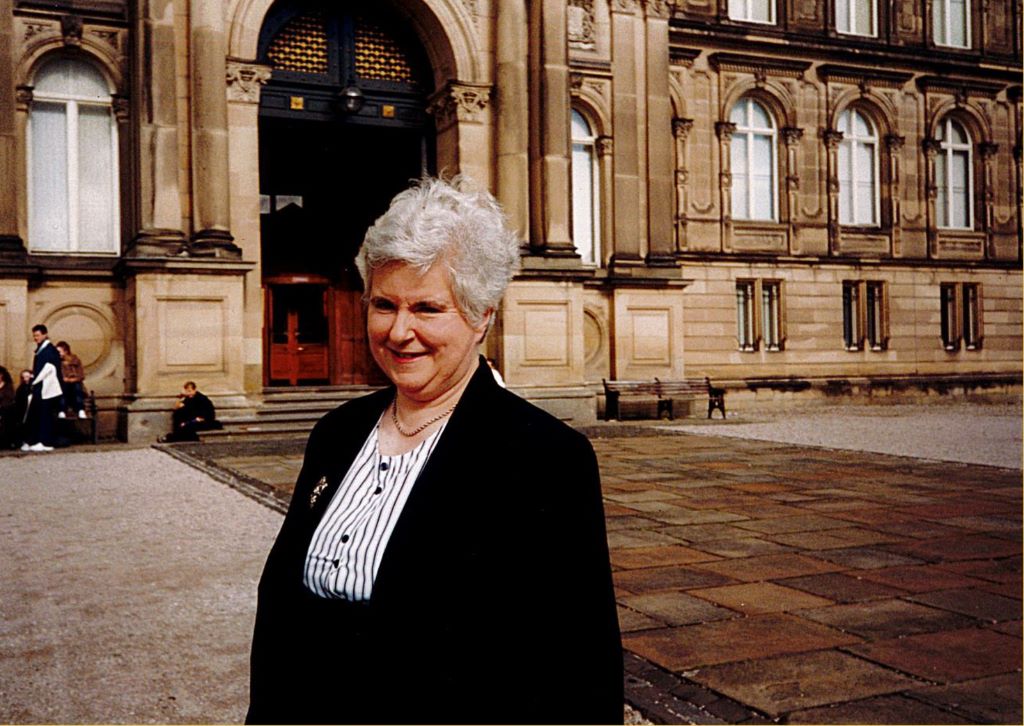
Tribute to former Bowes Museum curator Elizabeth Conran
Elizabeth Conran, who has died aged 87, was a remarkable woman.
For more than 20 years, until 2001, she was in charge of The Bowes Museum when it was controlled by Durham County Council (DCC).
Softly-spoken and cheerful, her diminutive frame belied the sharpest of minds and an indomitable spirit.
She also had a huge depth of knowledge about art.
During her 22-year tenure in charge of the Barnard Castle museum, Mrs Conran overcame challenges with local authority budgets and bureaucracy, while also boosting the museum’s profile and popularity, and significantly adding to its collections.
Her work was recognised with an OBE in 1994.
In 1982, she inspired a public appeal to raise £385,000 in only a few weeks to help pay for the two Canalettos now hanging in the museum’s picture galleries.
It was just one many accomplishments.
And the legacy of her work there lives on in the museum.
Mrs Conran grew up in Larbert near Falkirk.
She studied fine art, maths and astronomy at Glasgow and achieved a MA.
She also studied French, English and moral philosophy.
She worked in London at the Kenwood Museum and then went to Manchester first as keeper of art at the then City Art Gallery, and then afterwards as arts advisor to Greater Manchester Council, where she met her husband George Loraine Conran who was a museum director in the city.
Their daughter, Violet, died in 2014, aged 42.
In an interview with the Mercury in 2020, Mrs Conran said her job as curator of the Bowes had been a dream come true, but that it had often been frustrating because of DCC budgetary constraints.
She said then: “We had £1,000 a year for exhibitions, but more money was available for conservation, so I would find something out of the store which needed conservation and then put that into the exhibition.
“It was about using funds and grants in creative ways.”
When in 1998-99 DCC threatened the museum with winter closure, Mrs Conran, supported by the Friends group, led the fight to stop it.
Hannah Fox, executive director of the Bowes, said: “We are deeply saddened to learn of the death of Elizabeth Conran, a much-valued former colleague.
“Elizabeth was a force for change, both here and across the museum sector regionally and nationally.
“She introduced a programme of ground-breaking exhibitions, among them Royal Style: The Queen Mother’s Wardrobe, which drew 80,000 visitors in four months during the museum’s centenary year in 1992.
“She also built lasting loan partnerships with major museums and galleries, bringing The Bowes Museum to national and international attention.
“Elizabeth brought professional rigour and deep knowledge to the museum during a challenging period.
“She steered its return to its original status as an independent charitable trust.
“A passionate scholar of Spanish art, she published the museum’s founders’ correspondence on the acquisition of the El Greco and two Goyas and she oversaw the acquisition of two large views of Venice by Canaletto, broadening the European scope of the museum’s collecting policy.
“Her bond with the museum endured long after she retired, and she remained a dedicated member of its former Friends group.
“Elizabeth shaped the museum we know today, and her legacy lives on in its galleries, its collections and its ambitions.
“Our thoughts are with her loved ones.”
In a personal tribute, Jane Whittaker, collections manager at the Bowes, said: “She made some remarkable acquisitions during her tenure, including the magnificent Warwick cabinet.
“Her extensive knowledge of the collection saw her continue to give many lectures following her retirement.
“She remained a steadfast Friend of the museum and she was planning to visit and see the Impressions of Light exhibition before her last illness.
“Always with a twinkle in her eye to match her great sense of humour or when she was imparting some nugget of knowledge, she will be very much missed.”
Fiona Turnbull, a former chairperson of the erstwhile museum Friends, said: “She and I were brought up a few miles apart but our paths never crossed until she arrived in Barnard Castle in 1979 as curator of the Bowes.
“We became friends as we had similar backgrounds and understood and spoke with the same Scottish tongue.
“When we spoke a couple of weeks ago, her brain and memory were still sharper than mine!”
Annie Clouston said: “Elizabeth was my neighbour and friend, and I mourn her passing.
“She was a proud Scot, the daughter of a highly respected and innovative teacher whose death – when Elizabeth was 15 – affected her deeply.
“The financial consequences of his death led to a struggle for Elizabeth to go to university, but she was determined – a trait that those of us who knew her would recognise.
“While finishing her degree her potential was noted and, on graduating, she was offered a job via the Iveagh Bequest at Adam House in Hampsted, where she stayed for three years.”
Elizabeth endured more than one family tragedy during her life.
Ms Clouston said: “When their daughter was a teenager, Loraine fell ill and was hospitalised for two years before his death.
“Her only sister Janet died in 2013, and then Violet died the following year after a harrowing fight with cancer.
“In later years, despite increasing physical frailty, her indomitable spirit saw her continue to live in her own home – aided by helpers, including friends, Anna Wood and Leah Hobson.
“Elizabeth’s considerable intellect and love of the arts was with her to the end.
“She supported local artists and amassed a unique collection of their work.
“She loved ballet and music and was a lifelong Guardian reader who took great interest in local affairs, caring deeply about the dale and its residents.
“Stoicism and service ran through Elizabeth’s veins as did her enduring respect and love for the arts and artists.
“We will miss her greatly, she was a special human being.”
In the Mercury interview of 2020, when asked about her favourite objects in the museum collection, she named two paintings: Sassetta’s Miracle of the Eucharist and a 17th century Dutch seascape by Simon de Vlieger (c1600-1653).
The Sassetta, painted around 1424, shows a lay brother of the Carmelite order being struck dead at Holy Communion because of his sacrilegious doubting of the presence of Christ in the Eucharist.
It was Mrs Conran who noted its local connotation – likely representative of John Wycliffe who came from the nearby village of the same name.
He was the first to translate the Bible into English but regarded as a heretic as he did not believe in transubstantiation (bread and wine turned into the flesh and blood of Christ).
He was taken fatally ill during mass.
The second painting’s profile is little known.
She said then: “It’s a very quiet painting, all in grey.
“But there is clever creation of space… ships on the left and the right take your eye down the middle… the emphasis of space in the middle is wonderfully evocative – it’s a space which is meant to talk to the viewer.
“It’s my theory that it was a tribute to a Dutch admiral killed in combat.
“The guns on the ships are firing – a salute.”
The museum and the town in which it stands offer their own salute in tribute to an extraordinary woman.
Tags |