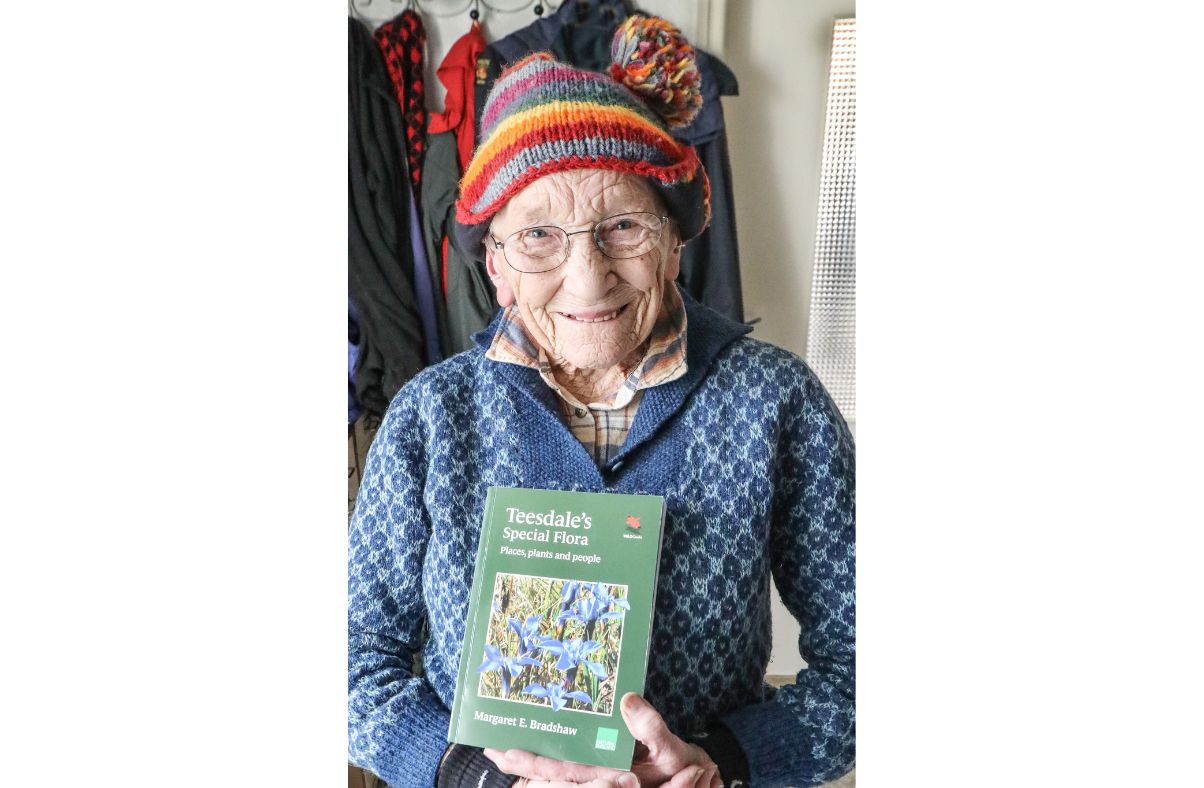
Teesdale has inspired many. Yet it is Dr Margaret Bradshaw, at 100, who still leads the way to safeguard the area’s extraordinary rare flora as Martin Paul discovered.
Photos by Martin Rogers
It is perhaps not a surprise that Teesdale has been home to some of the world’s foremost botanists considering its wealth of nature and rare plants.
They range from renowned author and broadcaster Dr David Bellamy, who graced the country’s television screens with his gravelly voice, to leading orchid expert Dr Richard Warren, who helped capture an international smuggler of rare tropical flowers.
And then there is Dr Margaret Bradshaw.
Even at 100 years of age, she continues to lead the fight to preserve and grow the rare plants of Upper Teesdale.
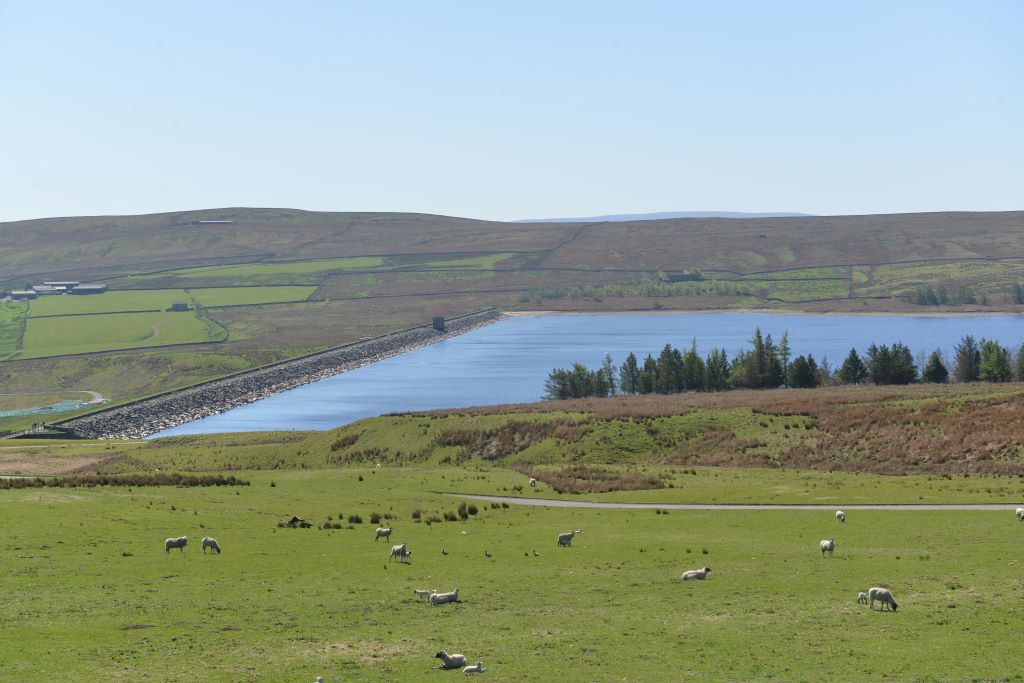
Her prominence came to the fore in the sixties when she campaigned against the construction of Cow Green Reservoir, but probably her most outstanding achievements have come in her later years, when she returned to Teesdale at the turn of the century.
Dr Bradshaw and her twin John were born at Tibthorpe, in the Yorkshire Wolds, on January 4, 1926.
There her parents George and Maude farmed with traditional methods.
She attended school at Bridlington before going on to study botany and zoology.
It was at university that she first became aware of Teesdale.
She said: “Somehow I was drawn to this rare flora of Teesdale. It is a mystery to me.
“While I was at Leeds I had heard there was something special about the flora in Teesdale and that stayed with me.”
She graduated with honours and began teaching sixth form at Bishop Auckland.
While teaching she was encouraged by Dr Max Walters, of Cambridge University, to use her spare time to look at the plants growing in nearby Teesdale.
Dr Bradshaw said: “He had seen some rare lady’s mantle in Teesdale and suggested I might like to go and look for them. I didn’t know them, it took me a whole season to learn them.
“The next year when I picked it up again, the whole lot had fallen into place. Over the next couple of years I produced a map of those plants – not only in Teesdale, but Weardale as well.
“The rarest lady’s mantle are the meadow types and one of them I found on my first outing, which had never been recorded in Britain before. Max was the first to identify it, but I was the first to find it.”
This work led to the botanist being invited to complete her PhD at Durham and a grant was awarded for her to research into lady’s mantle.
On competition of her doctorate, Dr Bradshaw was employed by Durham University’s extra mural department, which organised adult education classes across the North East.
She said: “I had classes in Durham, Teesside, Billingham, Sunderland, Barnard Castle, Middleton-in-Teesdale… I never managed to get into Bishop Auckland.
“I tried repeatedly but no, they weren’t interested in plants, only coal mining history.”
The next major event in the young doctor’s life was a proposal to build a reservoir at Cow Green.
As a member of Durham and Northumberland Naturalists Trust she helped set up the Teesdale Defence Committee which raised about £23,000 to oppose the reservoir plans.
She said: “We had several appeals – people would send us their half-crowns, two and sixpence in those days, what they could afford. There was no Heritage Lottery Fund to call on. We put up a fight.”
A parliamentary select committee was formed to look into the proposal.
Dr Bradshaw said: “It was just like a law court, you had the QCs, they had their juniors, and all the evidence, all the cross-examinations.
“I organised things so I could be their main support on nearly all the hearings, which meant I sat behind our QC and fed them bits of information as appropriate.”
Ultimately the committee favoured the industrialists and the plans were given the go-ahead.
Dr Bradshaw said: “While the reservoir was being built I got a share of the £100,000 that ICI gave for research – conscience money – and with a research assistant I set up a study of the plant population dynamics.”
Along with mapping out rare plant species, Dr Bradshaw led a number of sessions with volunteers, school pupils and amateur botanists in the upper dale.
It would be the first systematic study of the plants on Widdybank Fell and Widdybank Pasture.
It was around this time, in 1968, that she helped found Teesdale and Weardale Search and Mountain Rescue Team and was one of its first members.
She was awarded an MBE by the Queen in 1977 in recognition of her conservation work in Teesdale.
In 1982 the botanist married Dr Michael Proctor and the couple moved to Devon, where she became a shepherdess, tending to a flock of Gotland sheep.
The couple separated in 1995 and she returned to East Yorkshire.
In the summer of 1998 Dr Bradshaw found a new home in Eggleston which she promptly named Lady’s Mantle.
She soon formed a new botany group and began remarking the areas of her previous studies.
Since then she has become an advocate for upper dale farmers, arguing against Natural England’s attempts to remove sheep from the hills.
Her campaigning has led to Natural England beginning to recognise that grazing is necessary to prevent grass from growing too tall and overshadowing the precious flowers which went into decline in areas where sheep were taken away.
She said: “Getting the grazing level back to the level before they reduced the sheep, I think this was partly achieved two years ago.”
The botanist’s work was noticed by officers of the North Pennines Area of Outstanding Natural Beauty Partnership (AONB) and was awarded its inaugural Pendlebury Award in 2013.
Dr Bradshaw’s work also uncovered a dramatic decline in the numbers of rare plant species and she formed the Teesdale Special Flora Research and Conservation Trust.
The trust’s two main activities are conducting surveys and finding ways to reverse the decline, and to encourage interest and knowledge in Upper Teesdale’s botanical treasures.
At the age of 95 Dr Bradshaw undertook an 88km horse trek, on trusty steed Sigma, to raise
cash for the trust.
The distance was significant because it was equivalent to the boundary distance of the River Tees catchment where many of the rarest plants are found.
Despite having contributed to many publications over the years, it was not until she turned 97 that her first book appeared on bookshelves in the form of Teesdale’s Special Flora – Places, plants and people.
On her 98th birthday she undertook to walk 45 miles to raise more cash, but enjoyed walking so much that she tripled the target and trekked an incredible 220 miles, raising in excess of £5,000 for the cause.
Her birthday was celebrated in January with a special afternoon at High Force Hotel hosted by Lord Barnard.
Despite her achievements, the centenarian believes there is still much to do and now hopes that a new consortium that includes her trust, Natural England and the North Pennines National Landscape team, will drive the work forward.
She said: “I am hoping this body will take care of the plants and even if I am not here, it will continue. I am optimistic and I hope I live long enough to help to get it started in, what I think, is the right way.
“I haven’t achieved what I wanted, but with this body I hope it will be achieved in the long run.”