Sometimes the smallest things can make the biggest difference – this is one of those times.
On the Tucson’s steering wheel, within easy stretch of your left thumb, there is a small button.
It deactivates the dreaded lane keep assist and it’s as easy as holding it down for a few seconds. The corresponding symbol on the Hyundai’s virtual clocks turns from green to orange and that’s it.
You are now in complete control of the steering, as you should be. No ferreting around in the swipey touchscreens to turn it off, ironically relying on the keep lane assist to keep you on the road while you try. One button, ahh, just the ticket.
It will default back on as soon as you kill the engine but that’s not a problem as it’s dead easy to deactivate. Now we can get on with the driving.
You may notice quite a few of these Tucson’s on the road. That’s because they are a best seller and that looks like it will continue thanks to a light facelift and spec upgrade.
The new Tucson inherits the essence of the previous model so there’s the ‘Parametric Dynamics’ at the front featuring thin, angular lines in the radiator grille, complemented by hidden ‘Parametric Jewel’ daytime running lights. The front bumper and skid plates are also new, giving it a wider stance.
At the rear, the skid plates are integrated into the bumper moulding giving the impression of a wider wheelbase. Redesigned alloy wheels also enhance aesthetics.
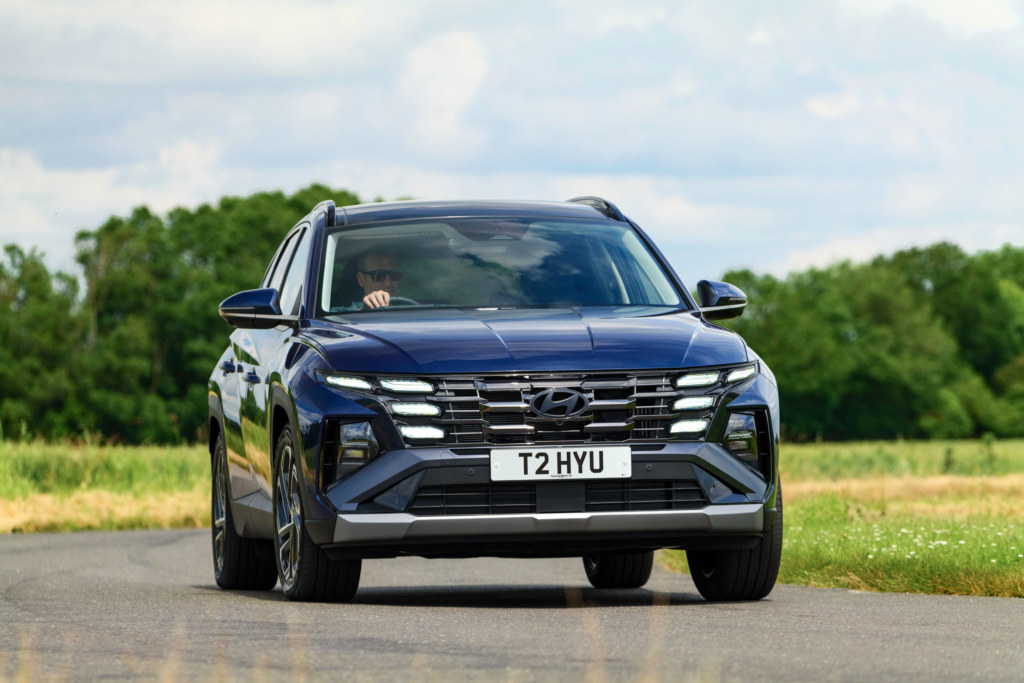
Remember when cars used to sport a human face? Headlamps for eyes, centrally mounted badge for a nose and air dam for a mouth.
Not any more. Tucson has the face of a spider with multiple shining eyes and a black lacy network of plastic which could be a web or even scars. It’s certainly eye-catching.
The rear lights look like a couple of ice axes ready to tackle a glacial mountain range, and why not, it makes life more interesting.
Interior design continues to turn full circle and I am so happy that it does. There is an obligatory touchscreen but the important stuff is physical.
Heating and ventilation controls are real not virtual and a redesigned centre console is blessed with buttons for regularly used functions – hurrah! There’s also wireless charging pad housed in the centre armrest – nice.
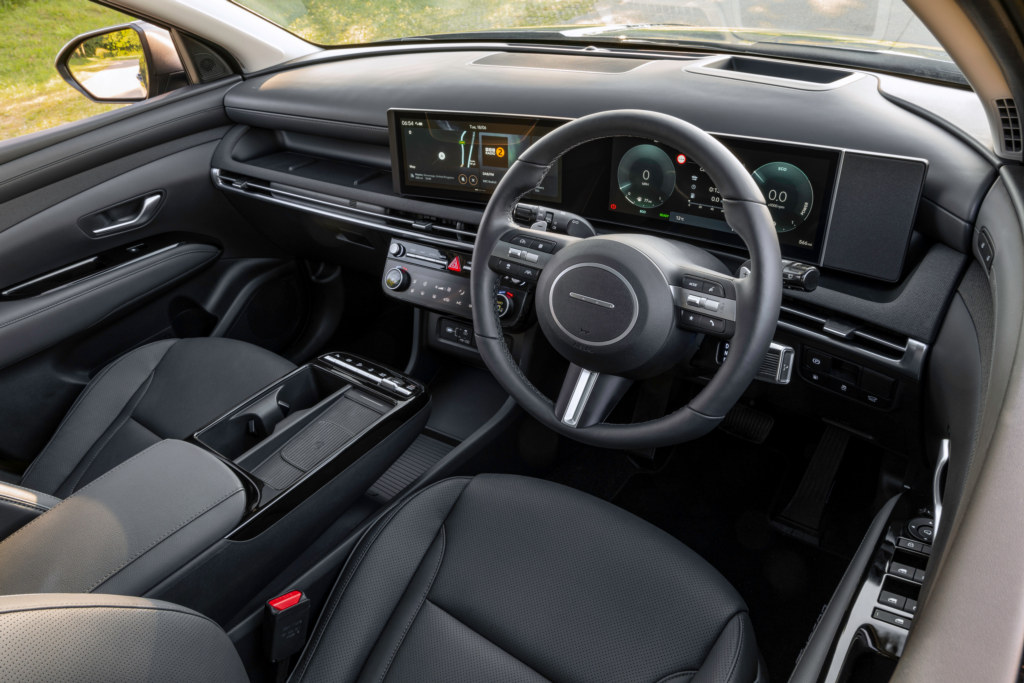
If you feel great about yourself riding in your motor then the experience is always going to be a good one. Tucson scores highly as it looks great, the interior is excellent and the driving dynamics are spot on.
The great thing about PHEVs is they pack greater wallop than their HEV stablemates. So this particular Tucson comes with a mighty 252PS offering very strong performance.
The electric side of the workings make it rapid off the mark and the 1.6 turbo petrol adds some real meat to the proceedings.
It’s only two-wheel drive but grip is remarkably good, as is body control. Dial in some rather sharp and well-weighted steering and you can’t fail to be happy driving the Hyundai long distances.
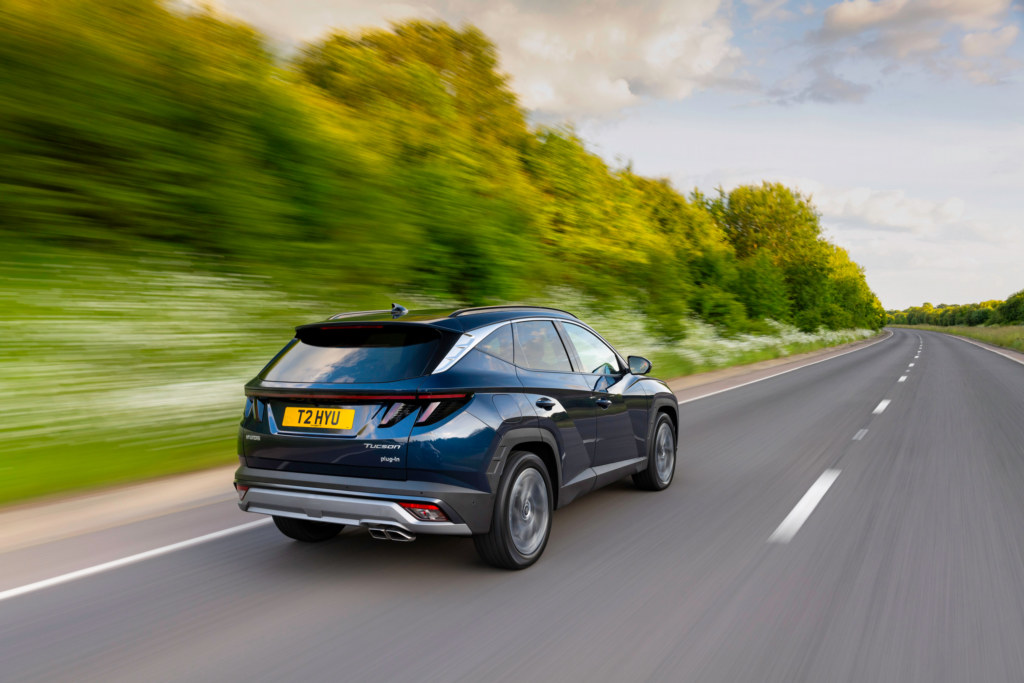
The list of standard equipment is endless and the ‘Ultimate’ model wants for nothing. The important things for me are decent infotainment with Bluetooth for my sounds and a banging set of speakers. The heated seats and heated steering wheel are the icing on the cake and all for just over 44k.
What’s not to like? The Tucson has a brave, unique look, great interior that actually functions as a car and deep reserves of power, all dressed up in an utterly reliable package.
Factfile
| Engine: 1.6 petrol turbo hybrid |
| Power: 252PS |
| 0-62mph: 8.5 secs |
| Top speed: 116mph |
| Combined MPG: 282 (when charged, averages 40+ in real road conditions) |
| Transmission: six-speed automatic, 2WD |
| CO2 g/km: 22 |
| Price: £44,385 |