Vehicle restrictions on an historic Teesdale bridge need to be more strict.
That’s the view of Whorlton Parish Council, which is concerned the village’s Grade II-listed suspension bridge will soon suffer avoidable damage once it reopens.
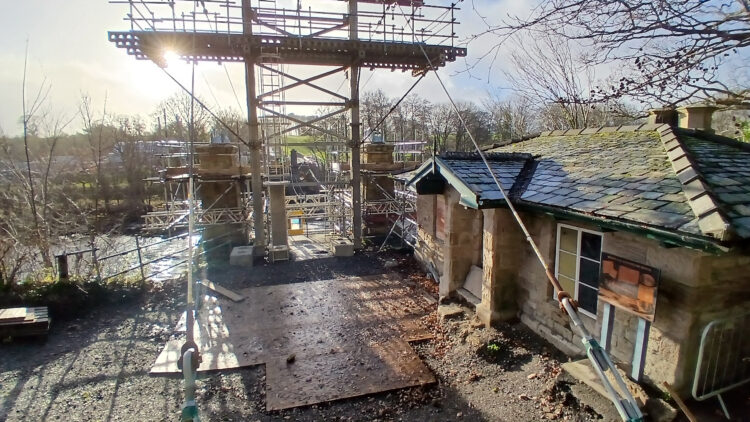
Whorlton Bridge is currently being restored at a cost of more than £8.4m. Closed to traffic in 2019, and to pedestrians a year later, the vital community link is predicted to finally reopen in the autumn.
However, as things stand, there will be no new restrictions to vehicles crossing the chain-link bridge other than those that existed when it closed.
At both ends of the bridge there are currently barriers designed to restrict access, including signs indicating a 3-tonne weight limit and a vehicle width restriction of 1.8m (6ft).
While the gap between the barrier kerbs is 1.8m, the actual bollards that stop vehicles getting through to the bridge are actually 2.5m apart (8ft 2ins).
The council believes the current distance between the bollards is too wide, allowing large vehicles that exceed the weight limit to mount the kerb and then cross the bridge, which originally opened in 1831.
Speaking at the latest meeting of Whorlton Parish Council, chairman Cllr George Stastny said he was worried the newly-repaired bridge would suffer damage unless new barriers were installed and he will be writing to Durham County Council to raise the issue.
“What they are proposing is just to put back exactly what was there before, just the bollards,” he told the parish council.
“I’ve measured the distance and they are just 2.5m apart, which means you can get tractors through, they just mount the kerbs and over they go.”
Cllr Stastny wants the highways department to install the same type of barriers that can be found at the Union Chain Bridge, the oldest chain suspension bridge still carrying traffic. It crosses the River Tweed, near Berwick, in Northumberland, and has very strict width restrictions.
“The bollards on the Union Bridge are exactly 7ft apart, which is 2.133m, which makes all the difference,” he explained.
“I have been there and people have to slow down – anything wider than an ordinary car can’t go through. That difference of 40cm makes all the difference.
“So, I would like to write to the county council stating that it’s essential we follow the tried and tested example of the oldest chain suspension bridge in the world.”
Councillors supported the proposal to write to the council on the understanding that ambulances would still be able to cross the bridge in the event of an emergency.